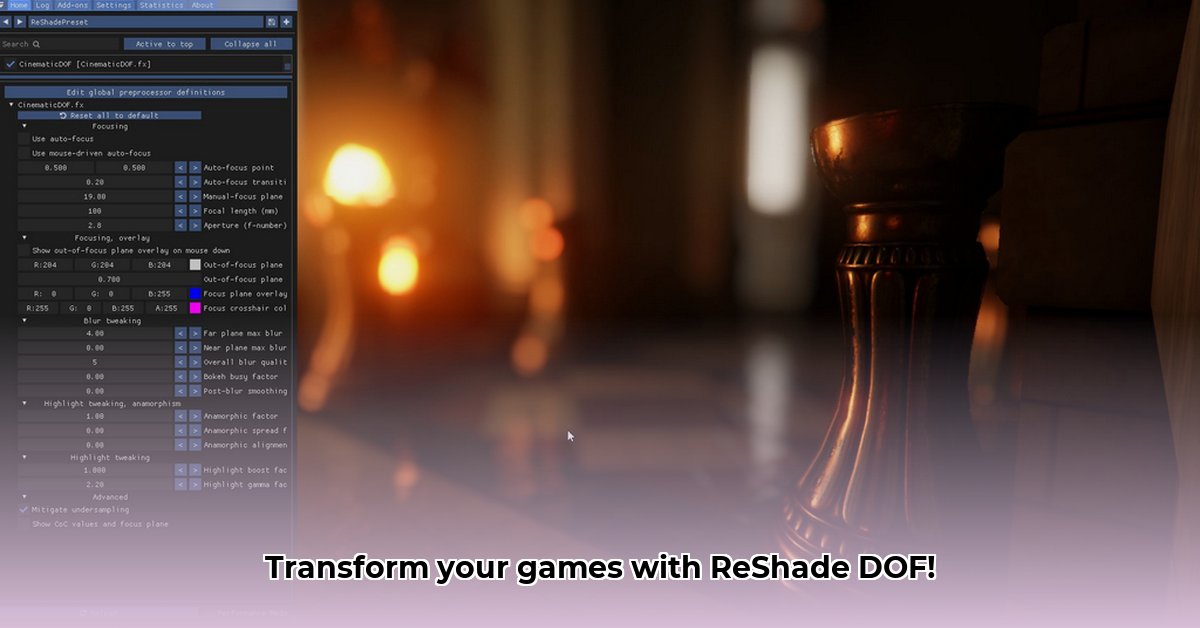
Want to make your games look like Hollywood blockbusters? Depth of Field (DoF), that cinematic blurry background effect, can dramatically improve your gaming visuals. This guide will show you how to effortlessly add stunning DoF to your games using ReShade and a popular shader called Marty McFly's. We'll provide a step-by-step walkthrough, troubleshooting tips, and performance optimization advice, ensuring you achieve a perfect balance between breathtaking visuals and smooth gameplay.
ReShade and Depth of Field: A Quick Overview
ReShade is a free, versatile post-processing injector. It adds visual effects to your games after they've rendered, enhancing their appearance significantly. Depth of Field (DoF) is a key effect—it simulates the way our eyes focus; close objects are sharp, while distant ones are blurred, creating depth and realism. Marty McFly's shader is a popular community favorite due to its high-quality results and relatively good performance. But will it work for you?
Downloading and Installing ReShade: A Step-by-Step Guide
Ready to enhance your games? Here's how to get started:
Download ReShade: Visit the official ReShade website (https://reshade.me/). Download the latest version compatible with your graphics card (DirectX or Vulkan). ReShade usually auto-detects this, but double-check to be safe.
Select Your Game: Run the installer. Choose the game's executable file (.exe) from its installation folder. This tells ReShade which game to enhance.
Choose Your Graphics API: ReShade will usually identify the correct API (DirectX or Vulkan). Confirm to proceed. Most games use DirectX.
Install Shaders: Once ReShade is installed, download Marty McFly's DoF shader (location may vary; check gaming forums or dedicated websites). Copy the shader files into your game's ReShade shaders folder (usually within the game's directory). ReShade automatically detects new shaders.
Finding and Installing Marty McFly's DoF Shader
Downloading and installing Marty McFly's shader should be straightforward, but bear in mind that the availability and exact process of acquisition might vary. Usually, you'll need to find it from a suitable community resource (check dedicated forums or the creator's website). The file will then need to be placed in your appropriate ReShade shaders folder.
Configuring Your DoF: Fine-Tuning Your Visuals
Launch the game and bring up ReShade's in-game menu (usually by pressing Home). Locate Marty McFly's shader and adjust the settings to fit your preference. Experimenting is key! Key settings include:
- Blur Radius: Controls the strength of the blur. Start low, increasing as needed.
- Blur Shape: Modifies the type of blur effect (e.g., circular, hexagonal).
- Chromatic Aberration: Adds subtle color fringing to the blurred areas for a more cinematic feel.
Troubleshooting Performance Issues: Keeping Your Frame Rates High
While ReShade enhances visuals, it can impact performance. If your game runs slower, try these:
- Reduce Blur Radius: The most effective way to improve performance.
- Limit Effects: Using multiple ReShade effects simultaneously can overwhelm your system. Start with just DoF.
- Shader Settings Optimization: Carefully review the shader settings – adjust values incrementally. Some features (like sharpening) can impact performance. Disable them if needed.
Remember, finding a balance between visual quality and performance is crucial.
ReShade DoF: Weighing the Pros and Cons
| Pros | Cons |
|---|---|
| Enhanced visual fidelity | Potential performance impact |
| Easy to set up (after initial installation) | Requires some technical understanding |
| Highly customizable | Shader updates might require reinstallation |
Conclusion: Immerse Yourself in Cinematic Gaming
Adding Depth of Field via ReShade can transform your gaming experience. Experimentation is paramount. Don't hesitate to consult online communities for further help and configurations. Your games will look significantly better with just a little time and effort. Enjoy!
Optimizing Marty McFly's ReShade DoF Shader for Performance: A Deeper Dive
While Marty McFly's shader offers amazing results, performance can be affected by your hardware and settings. Understanding the shader's parameters and how they impact your system is crucial for optimization.
- High-Quality Settings vs. Performance: Choosing high-quality settings will create stunning visuals, but it may significantly reduce frame rates.
- Resource Management: Marty McFly's shader uses your computer's resources to create the DoF effect. If your computer is not powerful enough, this will impact performance.
- Shader Optimization: Adjusting the numerous settings in Marty McFly's shader to fit your hardware limitations is critical. It allows you to fine tune the balance between visuals and performance.
Key Settings to Tweak for Optimal Performance:
- Sample Count: Lower values improve performance at the cost of blur quality.
- Max Blur Radius: Reducing the radius lowers resource usage.
- Shape Quality: A lower quality setting sacrifices some visual fidelity but significantly speeds things up.
- Disable Unnecessary Features: Temporarily disabling extra features such as chromatic aberration can help improve performance.
Remember to save your settings after you've found the optimal balance between visual quality and performance. Don't be afraid to experiment – finding the best settings for your system is what matters most!
⭐⭐⭐⭐☆ (4.8)
Download via Link 1
Download via Link 2
Last updated: Tuesday, April 29, 2025